25 May, 2026
Have you made the decision to step into the future and own an electric vehicle (EV)? Or perhaps you’ve already purchased one of Tesla’s remarkable cars and are waiting for its arrival in Egypt? Congratulations! You have taken an excellent step toward slashing fuel costs and contributing to a cleaner environment.
However, once you receive your vehicle, the most critical challenge facing every new EV owner in the Egyptian market arises: How and where can I charge my car safely and quickly?
While reliance on public charging stations in Egypt is growing, it is still not enough for comfortable daily use. The real secret to a hassle-free driving experience lies in setting up your own dedicated charging station at home or the workplace. This is exactly where an official tesla electric car charger comes into play.
In this comprehensive guide, brought to you by the EV infrastructure experts at Plugy EV, we will take you on a detailed tour covering everything from types of Tesla chargers and technical specifications to the actual market costs in Egypt. We will also highlight the precise engineering requirements needed to ensure a safe and efficient installation that protects your car’s battery and your investment.

When it comes to setting up your home charging infrastructure, Tesla offers solutions designed to fit different daily needs. Before making a purchase decision, it is vital to understand the core differences between the available options to get the most out of your tesla electric car charger.
The Tesla Wall Connector (3rd Generation) is the ultimate and primary choice for any Tesla owner (or any other compatible EV). This charger is permanently mounted to the wall in your garage and is engineered to deliver the maximum possible charging speed in a residential environment.
If you travel frequently or need a flexible, portable solution that fits right into your car's trunk, the Tesla Mobile charger is the perfect companion.
One of the biggest gaps in the Egyptian market is the lack of transparency regarding the true cost of setting up a home charging station. Based on the integrated products offered at Plugy EV, home charging setups can range from cost-effective 7kW units to high-performance 22kW wallboxes, accompanied by a specialized tesla electric car charger kit.
To give you an exact and transparent picture, we have structured the actual costs in Egypt into the following pricing index:
|
Item / Equipment |
Technical Specifications |
Actual Cost / Range in Egypt (EGP) |
|
QUIKR Wallbox Charger |
7 kW Smart Home Wallbox (With Tethered Cable) |
25,000 EGP |
|
QUIKR Smart Fast Charger |
22 kW High-Performance Wallbox (Socket Type) |
29,999 EGP |
|
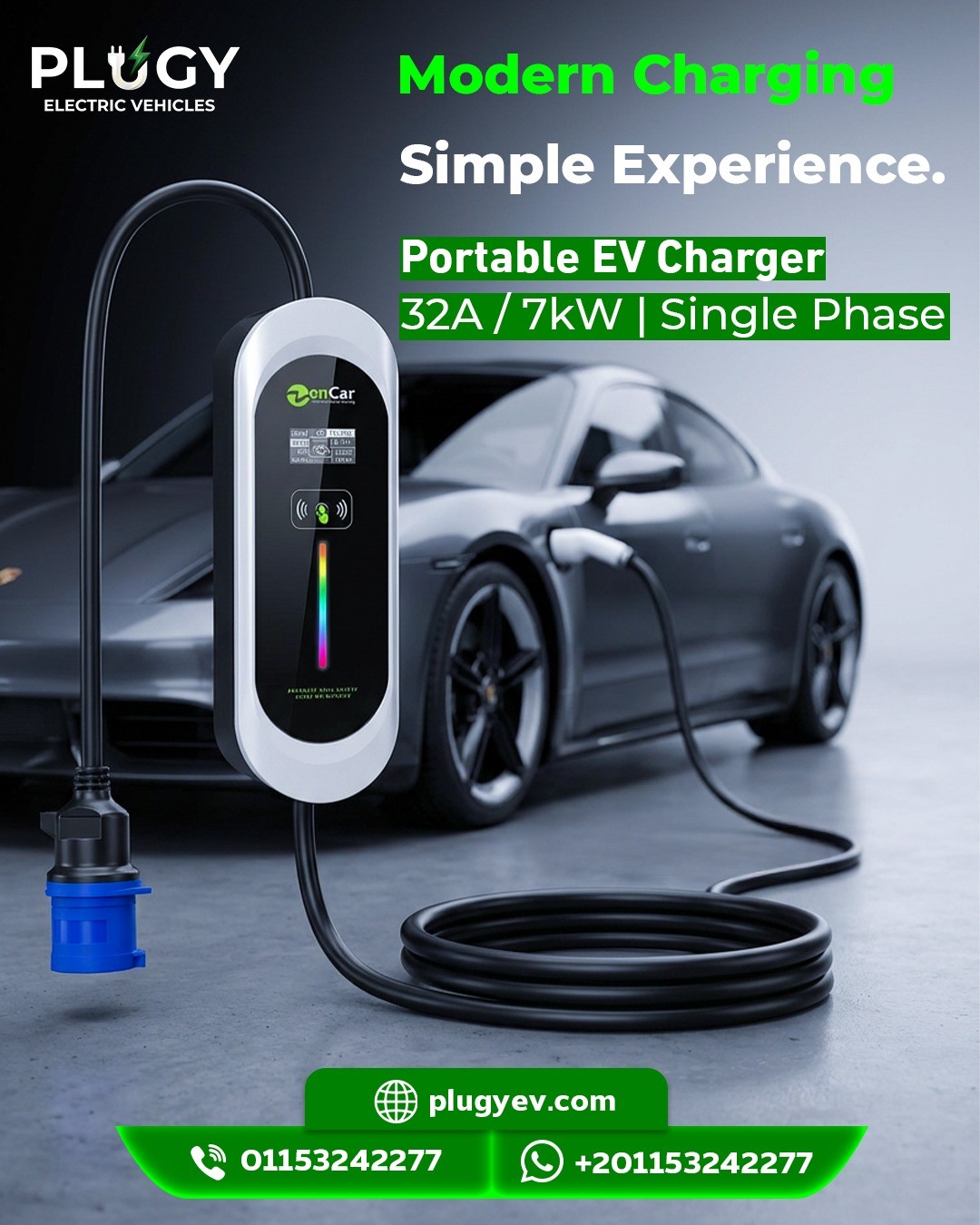
Zencar Model A / E Portable |
7 kW to 22 kW Adjustable Mobile Charger (For Home & Travel) |
14,999 EGP – 18,500 EGP |
|
Zencar Certified EV Cable |
High-performance Type 2 to NACS / GBT Cables (7kW – 22kW) |
8,499 EGP – 9,999 EGP |
|
Certified AC Adapters |
Protocol converters (e.g., Type 2 to GBT) for US & EU Tesla models |
Starts from 3,000 EGP |
|
Circuit Breakers & Protection |
Mandatory protection breakers (RCBO / RCD Type B) to prevent leakage |
Depends on site requirements |
|
Engineering Installation |
Path routing, load distribution testing, and app setup by Plugy EV engineers |
Custom tailored package per site |
For Tesla models imported from the US that feature the NACS port, or EU models with Type 2/CCS2 ports, Plugy EV provides certified AC adapters starting at 3,000 EGP to guarantee absolute compatibility with your home installation.
Installing an EV charger is not just about "plugging in a wire." We are talking about drawing a high, continuous electrical current for several hours. This demands a sound engineering infrastructure to eliminate any risks of overheating or electrical fires.
To ensure your tesla electric car charger operates efficiently and safely in your home environment, the following standards must be met:
The Tesla Wall Connector requires a dedicated electrical circuit. To achieve its maximum charging speed (11.5 kW), the charger requires a 60-amp circuit breaker, allowing a continuous current draw of 48 amps.
In Egypt, many older homes operate on a limited Single-Phase system. Therefore, you might need to upgrade your electricity meter to a Three-Phase meter in coordination with the electricity distribution company. Alternatively, the charger’s internal settings can be configured to operate at a lower amperage (like 32 amps) to match your home's current capacity without overloading your domestic appliances.
Tesla vehicles are highly sensitive to power quality. If the grounding system in your home is inefficient or non-compliant with standard safety codes, the charger will refuse to supply power to the car as a protective measure. Ensure your installation engineers measure the ground resistance to confirm it falls within safe limits for EVs.
If you imported your Tesla from the European market, it will come with a Type 2 / CCS2 port, which is fully compatible with most standard chargers in Egypt. However, if it is imported from the US market, it utilizes the NACS (North American Charging Standard) port. In this scenario, if you are setting up a standard Type 2 station, you will need a high-quality adapter to securely and safely bridge the charger to your vehicle.
Read more about byd home charger

At Plugy EV, we don’t just sell hardware—we deliver integrated engineering solutions that guarantee your peace of mind. The EV sector in Egypt is evolving rapidly, and we are leading this transition with unmatched technical and engineering expertise.
Key benefits of partnering with the Plugy EV team:
Don't leave your valuable vehicle vulnerable to random installation errors or unqualified technicians in a field that is completely new to the Egyptian market. Contact us today to book your inspection and enjoy a safe, swift charging experience!
Owning an electric vehicle in Egypt is an extraordinary experience, and securing a reliable tesla electric car charger at home is the most critical investment to complete this journey successfully. Don't let complex technicalities stop you from enjoying your car. The correct infrastructure does more than just protect your vehicle—it elevates your property value and grants you priceless peace of mind.
Are you ready to future-proof your home for the electric revolution? Visit our website Plugy EV right now and request a consultation with our engineering team to design the perfect charging setup for your vehicle!
Read more about electric car charging price
Yes, absolutely. The 3rd Generation Tesla Wall Connector available in European and Middle Eastern markets usually features a Type 2 tethered cable, which is the standard standard for most EVs in Egypt (such as Mercedes, BMW, Volkswagen, and others). Even if the charger uses an American NACS plug, a simple certified adapter can be used to charge other non-Tesla vehicles.
Charging time depends entirely on the car's battery capacity and the power output of the station. Using a Tesla Wall Connector connected to a 60-amp circuit (outputting 11.5 kW), you can charge an EV battery from 20% to 80% in about 4 to 6 hours. A full charge from 0% to 100% typically takes between 8 to 10 hours, making it ideal for overnight tesla charging at home 220V cycles while you sleep.
To maintain long-term Battery Health, Tesla and all major EV manufacturers recommend relying primarily on AC home charging for daily use. DC Fast Charging (Supercharging) should be limited to long road trips to reduce thermal stress on the battery cells.